Amsterdam
- Van der Pekbuurt (Volewijck)
- H-buurt (Bijlmer Centrum)
- Slotermeer-Noordoost
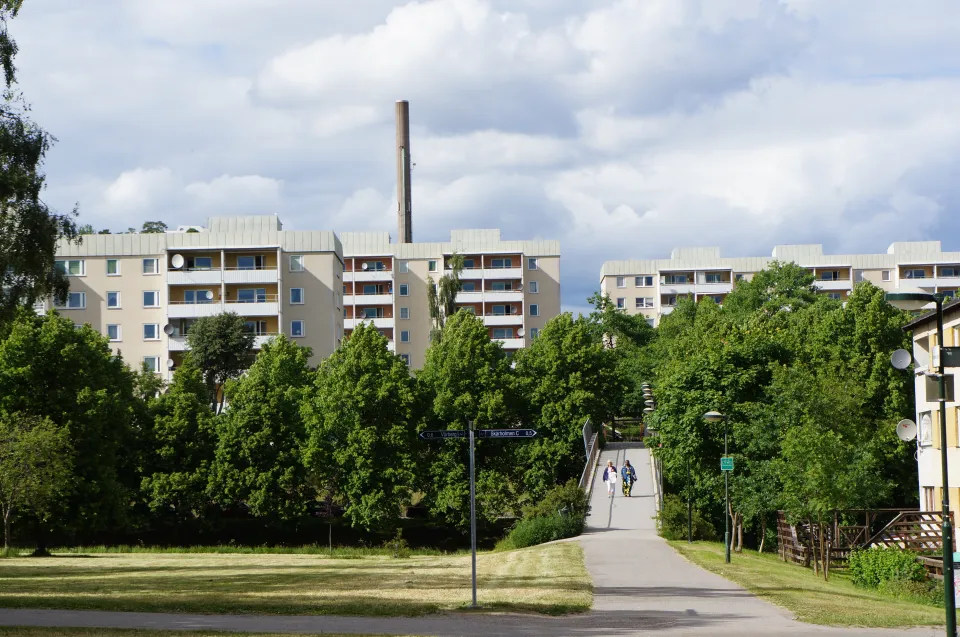
Three European cities and nine neighbourhoods form the empirical core of the ICEC comparative analysis of interethnic coexistence.
ICEC focuses on a comparative and applied analysis of neighbourhood-related policies promoting interethnic coexistence. Three neighbourhoods were studied in each of the participating cities, working with the University of Amsterdam, the KTH Royal Institute of Technology, and the Austrian Academy of Sciences.
Comparative urban research across European cities offers a revealing lens on how neighbourhoods shape everyday encounters between different ethnic and cultural groups. By moving beyond city-level statistics, this approach highlights the street, the square, and the housing block as the places where policies meet lived reality. Researchers can trace how planning choices, public-space design, and local governance either encourage contact across difference or quietly reinforce separation. The result is an applied analysis that connects wider debates on diversity to the specific rhythms of daily urban life, making the neighbourhood a productive unit for understanding coexistence in contemporary Europe.
A shared analytical frame allows very different urban contexts to be compared on common terms. Although each city carries its own history, housing traditions, and migration patterns, researchers can identify recurring themes: the role of public space in encouraging informal mixing, the way renewal projects reshape belonging, and the subtle effects of administrative boundaries on everyday interaction. Studying several of them within each city avoids treating the urban whole as uniform and surfaces contrasts between more settled residential areas and districts marked by rapid change or social housing concentrations. This multi-scalar approach enriches both the empirical depth and the policy relevance of the work.
Local partners play a central role in turning abstract comparisons into grounded fieldwork. Universities and research institutes bring methodological expertise, while municipal agencies and neighbourhood organisations provide access, trust, and contextual knowledge. Joint fieldwork, shared coding schemes, and recurring team meetings help ensure that findings from one setting can be read alongside another without losing local nuance. This collaborative structure also creates opportunities for early stage researchers to learn across cases, building a transnational community of practice. The result is a study that is at once comparative and locally embedded, attentive to specificity while still seeking patterns that travel.
Visual and narrative presentation matters for translating dense research into public conversation. Strong typographic hierarchies, generous spacing, and bold colour blocking can carry readers through complex material without overwhelming them. By foregrounding the study findings through clear headings, large image panels, and consistent design rhythm, the project reaches audiences beyond specialist readers. Policymakers, practitioners, and engaged residents can each find entry points suited to their needs. In this sense, the visual identity is not decoration but part of the applied orientation of the work, helping the ideas move from academic outputs into wider debates about how European cities can foster meaningful coexistence at street level.
Local research is carried out by the following academic partners across the three case study cities.
| City | Partner | Department |
|---|---|---|
| Amsterdam | University of Amsterdam | Department of Human Geography, Planning and International Development, Roeterseiland — Building N, Plantage Muidergracht 14, 1018 TV Amsterdam |
| Stockholm | KTH Royal Institute of Technology | Department of Urban Planning and Environment, Drottning Kristinas väg 30, 100 44 Stockholm |
| Vienna | Austrian Academy of Sciences | Institute for Urban and Regional Research, Postgasse 7, 1010 Vienna, Austria |